
Top 20: Retail real estate innovations and innovators

Chain Store Age is celebrating its centennial year with a look at 20 visionary retail real estate properties, companies and people that altered the industry and left a long-lasting mark on the world of shopping centers.
Whether it was through introducing new types of retail experiences or implementing a new development or architectural strategy, these honorees shifted not only the way shopping centers are created, but also the way that consumers engage in the retail experience.

Wanamaker Philadelphia Flagship (1911, Philadelphia)
Designed by Daniel Burnham in Philadelphia’s City Center district, the flagship store of Wanamaker’s, one of the first and most-successful department store businesses, was considered by many to be one of the largest and most beautiful retail stores in the world.
Located in the nation’s third-largest city at the time, the 1 million sq. ft. store was 12 stories tall and spanned an entire city block. Its most well-known architectural feature was the seven-story atrium known as the “Grand Court.” Simply put, the Wanamaker’s flagship store was — and still is — an architectural marvel.
After the Wanamaker’s brand closed in 1995, the building’s tenants included Hecht’s, Strawbridge’s and Lord & Taylor. Most recently, it housed Macy’s flagship store from 2006 until March of this year.
While the future of the property is unclear, the more than 110-year-old building helped set a gold standard for the department store experience. Its massive scale and ornate details made it one of the most innovative properties in the history of retail real estate.

Country Club Plaza (1923, Kansas City, Mo.)
Country Club Plaza was meticulously designed by J.C. Nichols, who created the 15-block area where towers, fountains and statues complement the retail lineup, a testament to its Spanish architectural influence. Country Club Plaza did not have an anchor store when it opened its doors. Instead, it featured a mix of grocers, specialty retailers, drugstores and more.
While the center had accommodations for cars, which were not commonplace at the time, Country Club Plaza was seen as a gathering place where guests could roam and browse, which is something that future centers would try to replicate with the “Main Street” design.
The property also began holding annual events soon after it opened, furthering its community gathering place status. The Plaza Lights Christmas display and the Plaza Art Fair are still traditions to this day.
Country Club Plaza is considered one of the most influential retail centers for its design, architectural features and sense of community. Nichols’ vision proved to be ahead of its time. The center is still thriving today as the oldest shopping center in the nation, serving as a place where guests can eat, shop, mingle and relax.

Sears (1925, Chicago)
When Sears opened its first store in 1925, it shook the business world and laid the foundation for the modern department store. Sears went through a number of changes before becoming the retailer it is known as today.
Founded in 1886 by Richard Warren Sears as a mail-order catalog, it originally offered watches and jewelry, and eventually broadened its categories to deliver clothing, farm equipment and even houses.
The revolutionary business became even more of an innovator when it opened its debut retail store in 1925. Located on the then-outskirts of Chicago, making for an unconventional
location, Sears’ first retail store wowed its guests by offering an expanded mix of products for both men and women.
The success of the company was meteoric. It operated thousands of stores across the U.S. at its peak.

Grandview Avenue Shopping Center (The Bank Block) (1928, Columbus, Ohio)
Developed by Don M. Casto Sr., The Bank Block opened in the late 1920s as the flagship property of the Casto company. With a 400-space parking lot and a total of 30 stores — Piggly Wiggly, A&P and Kroger among them — it marked the first time that national chains had joined together to offer their goods to the public.
Casto’s mission for the center was to bring shopping to the people and create an amenity experience for the community itself. The development kickstarted Casto’s career and played a significant role in shaping retail commercial development, including later projects such as the Town and Country Shopping Center in Whitehall, Ohio.
The Bank Block, later renamed to Grandview Center after it was purchased, was accepted for listing on the National Register of Historic Places for its 70th anniversary in 1998.
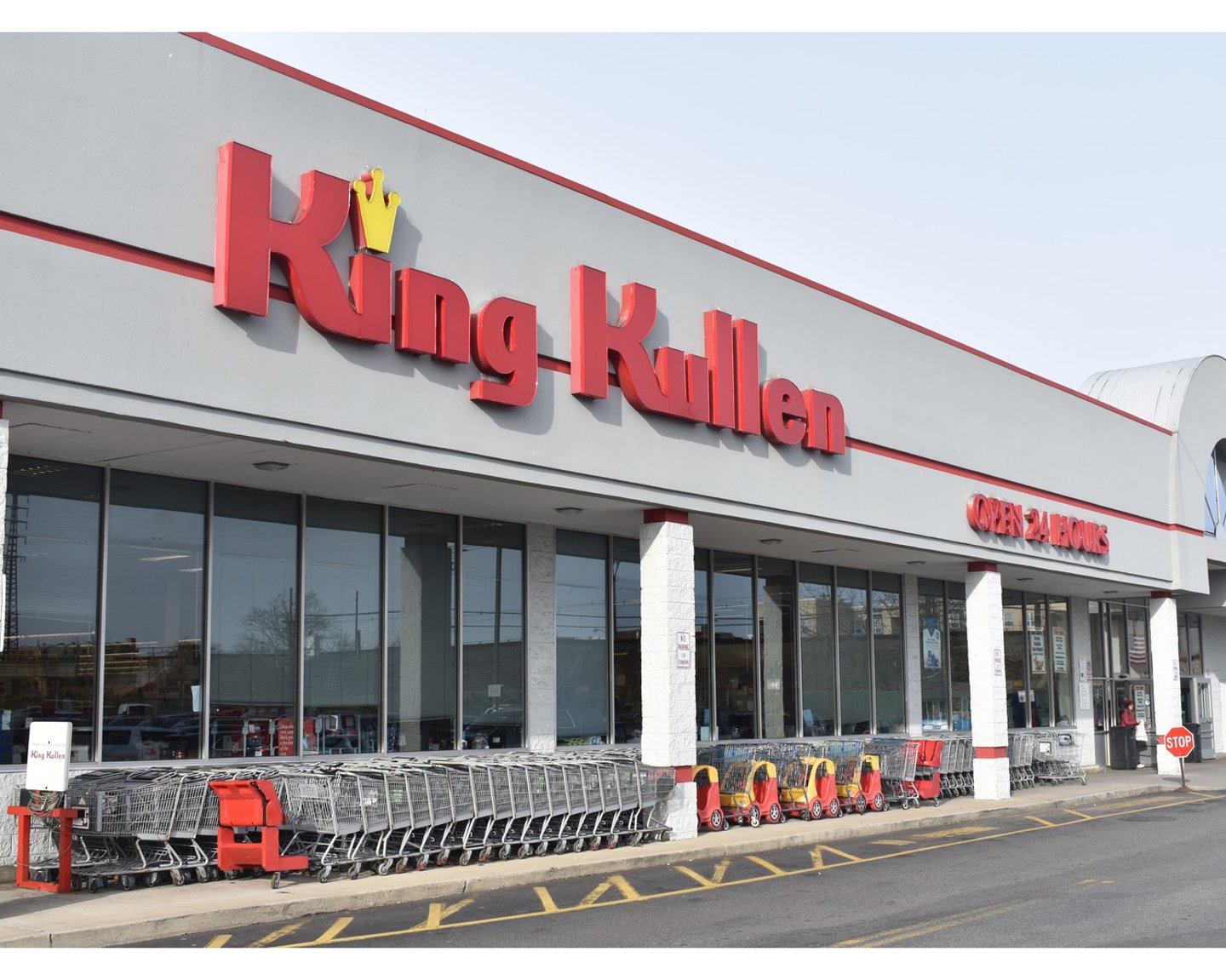
King Kullen (1930, Queens, N.Y.)
Supermarkets are now ubiquitous at retail shopping centers, often serving as the anchors that draw consumers in for “needs,” followed by trips to other locations for “wants.” Making its debut (and widely credited as the first supermarket) in 1930, King Kullen revolutionized the food shopping experience.
After Kroger employee Michael J. Cullen’s letter to senior management pitching larger store formats went unanswered, Cullen left the company and opened the first King Kullen in the Jamaica neighborhood of the New York City borough of Queens. The debut store spanned about 6,000 sq. ft., which at the time dwarfed other grocery locations.
King Cullen locations featured expanded food departments with more products, as well as parking lots, paving the way for future large-format grocers. Shoppers could find all their food needs at lower prices than they were used to.
While King Kullen operates just 27 stores on Long Island, the grocer’s impact goes far beyond a small geographic region. Had Michael Cullen’s vision for a larger grocery format not
become a reality, the retail real estate landscape would not be what it is today.
Baldwin Hills Crenshaw Plaza (1947, Los Angeles)
The post-war automotive boom fundamentally reshaped American society — with real estate developers going to great lengths to accommodate cars as they became more prevalent. Baldwin Hills Crenshaw Plaza — a two-anchor shopping center that spanned 550,000 sq. ft. located southwest of Downtown Los Angeles — was one of the first centers to be built specifically for guests arriving by car.
When it debuted, it was anchored by a five-story branch of The Broadway department store, Woolworth variety store and Vons supermarket. Baldwin Hills Crenshaw Plaza was also the first open-air retail center in California. The center became a hit with the African American communities who moved to the less-dense areas in the 1960s, serving as a community event and economic hub in fast-growing Los Angeles.
Baldwin Hills Crenshaw Plaza’s original concept was innovative, catering to the suburban consumers for whom automotive travel became game-changing.
Northgate Center (1950, Seattle)
Seattle’s Northgate Center, now known as Northgate Station, ushered in a new era of commerce in the United States. As the first retail center to be built after World War II, Northgate Center was an innovative center that would inspire future suburban shopping centers catering to a growing, car-driving population.
Designed by John Graham Jr., who later designed two other shopping centers in the Puget Sound region, the open-air mall opened with 18 stores anchored by the Bon Marché department store. Just two years later, the fully leased center held more than 70 tenants and included a four-story Northgate Building medical/dental center and the Northgate Theatre.
In recent years, Northgate Station has continued to redevelop. The mall became enclosed in the 1970s and, in 2018, underwent a mixed-use redevelopment that included a hotel, housing and the practice facility for the Seattle Kraken NHL team, which had its inaugural season in 2021.

Peterson Companies
Now in its 60th year in business, Peterson Companies has succeeded in building expansive, differentiated, high-traffic mixed-use centers in the area surrounding the nation’s capitol. The company got its start building planned communities, including both residential and retail properties, and eventually began building power centers, which evolved into the 18 mixed-use properties it has in its portfolio today.
Founder Milt Peterson championed the idea that retail-based developments should be community centers, not just shopping centers. An early example of Peterson Companies’ success is Fair Lakes. Built in the 1980s, the center was an early large-scale mixed-use community that integrated retail, office, residential and preserved open space, and set the standard for how people live, work, and shop in the suburbs of Northern Virginia.
The company’s signature development is the massive National Harbor outside of Washington, D.C., which features a resort and casino, a convention center, outlet centers and a massive Ferris wheel called The Capital Wheel.

Diane Cullinan Oberhelman
In the male-dominated field of commercial real estate, few women have left their mark on the industry quite like Diane Cullinan Oberhelman.
After beginning her career as a real estate agent in the early 1980s, Cullinan Oberhelman founded her own company, Cullinan Properties, in 1988 at just 28 years old. Under Cullinan
Oberhelman’s leadership, the company grew into a premier developer of retail and mixed-use projects, residential and office projects across the Midwest, Texas, and beyond, completing over $1 billion in developments to date.
In 2000, when Caterpillar closed its factories in East Peoria, Ill., the city acquired the property for redevelopment and Cullinan Properties joined the project as master developer. Now called The Levee District, tenants at the center include Target, Costco, Petsmart, several restaurants and more. The project also features pedestrian-friendly connections with biking and hiking trails, green spaces and more.

Sam Walton
The first Walmart store opened in Rogers, Ark., in 1962, and forever changed the way consumers shop. Just five years later, the Walton family operated 24 stores. Today, more than 4,600 Walmart stores dot the nation.
The debut location, originally called Wal-Mart Discount City, offered guests a wide selection of products at low prices, which differed from the traditional high markups that retailers relied on at the time. At just 16,000 sq. ft., the first Walmart store was half the size of a current Walmart Neighborhood Market. Still, it laid the blueprint for Walmart’s future business success, which allowed the chain to expand rapidly into the behemoth it is today.
At the center of Sam Walton’s retail real estate vision was the idea that small towns and rural areas were the perfect places to open stores that served as “one stop shops” with consistently low prices. Walmart’s reach into rural areas laid the foundation for real estate development in underserved areas, including shopping centers that are anchored by discount giants.
Without Sam Walton’s contributions to both retail and commercial real estate, the retail landscape would be quite different than it is today, and many consumers would not have the access to afford- able food, clothing, home items and more that they do now.

Triple Five Group
Founded in Canada by a family of Iranian immigrants, Triple Five Group has set the standard when it comes to the “mega-mall.”
The Ghermezian family business operates the three largest retail and entertainment complexes in North America: the Mall of America in Bloomington, Minn. (5.6 million sq. ft.), American Dream in East Rutherford, N.J. (3 million sq. ft.) and the West Edmonton Mall in Edmonton, Alberta (3.8 million sq. ft.). These massive properties are known for live event activations (recently, world-famous artists such as The Jonas Brothers and SZA have performed there), roller coasters and waterparks, all complementing a massive number of retail and dining tenants that are constantly evolving to meet the latest consumer trends.
Triple Five isn’t done yet. If built to current specifications, its planned American Dream Miami center in Florida will supplant Mall of America as North America’s largest center. Triple Five’s larger-than-life destinations are a testament to the evolution of not only commercial real estate, but entertainment as well. And the Ghermezian family’s story is not only a remarkable chapter in retail real estate’s history, but stands as a shining example of the accomplishment of the American Dream.
Alfred Taubman/Taubman Companies
While Victor Gruen is credited with being the best known designer of retail centers, Alfred Taubman may be one of the most innovative figures when it comes to expanding the footprint of shopping centers nationwide.
Taubman began his real estate career from humble beginnings in Pontiac, Mich., starting out developing small retail businesses and hotels, and eventually graduating to larger strip centers and enclosed malls. Taubman’s philosophy was centered on creating upscale retail environments with a wide variety of tenants that catered to consumers’ various needs. However, he often noted that it was important for shopping centers to reduce “resistance” for shoppers and make the shopping journey as seamless as possible.
Crown jewels of the Taubman Companies’ portfolio included Sunvalley Shopping Center (Concord, Calif.), The Mall at Short Hills (Short Hills, N.J.), the Beverly Center (Los Angeles) and Woodfield Mall (Schaumburg, Ill.), which stood as one of the nation’s largest enclosed malls for decades.
Taubman would later go on to be acquired by another retail real estate innovator, Simon Property Group, in 2020. Without Alfred Taubman’s vision for retail and his company’s groundbreaking projects, retail centers across the United States would look very different.
The Bucksbaum brothers
General Growth Properties (GGP) was a major player in the shopping center industry from the 1960s to the end of the 20th century, and the three Bucksbaum brothers who founded the firm left their impact on the industry.
Martin, Matthew and Maurice Bucksbaum founded the real estate company, originally called General Management, in 1954, entering the world of strip mall development from the grocery sector. The brothers’ first property was Town & Country Shopping Center in Cedar Rapids, Iowa. A decade later, they modestly grew their portfolio to five centers.
Then GGP became a real estate investment trust (REIT), one of the first companies to go public and attract large-scale investment. As seen in two of its premiere shopping centers — Ala Moana Center in Honolulu and Water Tower Place in downtown Chicago — GGP’s projects were mixed-use hubs that combined retail, dining and entertainment, often in high-value and emerging markets, separating it from other real estate companies.
At its peak, the company was the second-largest shopping center owner in the United States, behind only Simon Property Group. It was since acquired by Brookfield Property Partners in 2018.
While GGP may be no more, the three Iowan brothers built a lasting legacy in retail real estate by identifying emerging markets and building stand-out properties in them.

Poag Development
Poag Development is credited with the expansion of the lifestyle center, and if it were not for a scare from a major retailer, the shopping center landscape would look very different today.
When Dan Poag began his real estate career, he was working on developing strip centers in the Southeast region. After Kroger initially backed out of plans to anchor several properties (they were eventually convinced to open), Poag said he could not trust an anchor store. Thus gave rise to the lifestyle center — an open-air shopping center that has several unique design qualities, including typically a smaller size, a pedestrian-friendly atmosphere and the lack of a major anchor.
Poag and his partner Terry McEwen would go on to build lifestyle centers nationwide, beginning with Saddle Creek, a mall in the suburbs of Memphis, Tenn., that is still thriving to this day. Opened in 1987, Saddle Creek features more than 40 upscale retail and unique dining tenants.
Poag and McEwen’s lifestyle centers proved to be an asset class with high traffic and greater profitability due to their toned-down square footage and upscale tenants.

Easton Town Center (1999, Columbus, Ohio)
Inspired by European town squares, Easton Town Center in Columbus, Ohio, has established itself as one of the most high-traffic and high-concept retail centers in the nation. Its developer, Turkish-born Yaromir Steiner (CEO of Steiner + Associates, which operates the center) attended school in France, where he was surrounded by bustling town squares, markets, and street shops that emphasized community and walkability.
When he moved to the U.S., he called upon those influences to create Easton Town Center, which draws some 30 million visitors and grosses more than a billion dollars in sales a year. Standing at 1.7 million sq.-ft. of GLA, Easton Town Center has established itself as an in-demand destination for more than 250 retail, dining and entertainment tenants where greenery, fountains and brick roads offer guests a downtown feel.
Tenants range from Gucci and Louis Vuitton in the center’s Luxury District to mainstays such as Costco and Dick’s Sporting Goods and novel first-to-Ohio brands.

Paramus Park Mall (1974, Paramus, N.J.)
Before shopping centers had curated rosters of trendy and upscale eateries, the humble food court was where mall guests’ dining desires were met. Chain restaurants, typically quick-serve ones, surrounded a seating area where consumers could enjoy a meal mid-shopping — and where younger guests could meet up.
The concept first launched in its most well-known format at the Paramus Park Mall in New Jersey, and soon became a mainstay at shopping centers across the country. Guests rode the escalator to the second level of the center and were then greeted by a host of food options, providing them a break from the shopping experience.

Simon Property Group
Dating its founding back to Indianapolis in 1960, Simon Property Group has one of the most storied legacies in commercial real estate and has stood the test of time as one of the industry’s titans.
The company was founded by brothers Melvin and Herbert Simon, who started their real estate careers developing strip malls, the first of which opened in Bloomington, Ind. The company continued to expand its services, becoming a real estate investment trust and going public in 1993, making it one of the most significant players in commercial real estate.
Simon is the largest owner of shopping malls in the United States, with key properties including King of
Prussia Mall (King of Prussia, Pa.), Roosevelt Field (Garden City, N.Y.), The Galleria (Houston) and Lennox Square (Atlanta).
Since going public, the company has continued to grow its footprint of malls through major acquisitions, including Mills Corporation and Taubman Centers. Simon currently operates approximately 400 retail centers in 24 countries, ranging from outlet centers to luxury shopping destinations.

Potomac Mills (1985, Dale City, Va.)
Outlet malls are a hit with consumers, offering various name brand retailers in one location with discounted prices. Potomac Mills, which opened in the mid-1980s, set the precedent in the sector, serving guests in the Washington D.C., metropolitan area.
Herbert S. Miller and his Western Development Corporation (which would later become Mills Corporation) developed Potomac Mills, its first center, with the goal of merging the size of a regional shopping center with the value of an outlet mall. Now owned by Simon, it spans more than 1.54 million sq. ft. and is home to more than 225 retailers, including low-cost favorites such as Nordstrom Rack, Burlington, the Nike Factory Outlet, Marshalls HomeGoods and more.
Victor Gruen
One figure stands out from the pack when it comes to the history of retail real estate architects. Victor Gruen, dubbed the “Father of the Shopping Mall” by some, was born in Austria in 1903, and emigrated to the United States in 1938, fleeing the Nazi regime.
After founding the Victor Gruen Associates firm in 1951, he developed some of the most well-known and innovative shopping centers in the nation. Southdale Mall in Edina, Minn., opened in 1956, becoming the first enclosed shopping mall in the country, allowing guests to shop comfortably through the frigid Minnesota winter.
By the mid-1970s, Gruen and his team of architects had designed more than 50 shopping centers across the U.S. Gruen later went on to dislike shopping mall developments, as he claimed they “bastardized” his ideas and “destroyed cities.” The “Gruen effect” later became a term in psychology used to describe a store’s design disorienting a guest.
Gruen’s designs were key in laying the foundation for future shopping centers, and he remains a legendary figure in retail real estate.

Rick Caruso
Since the founding of his namesake development company in 1987, Rick Caruso has become one of the most well-known innovators in commercial real estate.
In his home city of Los Angeles, Caruso led the development of The Grove (Los Angeles), The Americana at Brand (Glendale, Calif.) and The Commons at Calabasas (Calabasas, Calif.) — three large open-air centers that attract tourists and locals alike in large numbers.
Caruso’s three best-known centers are known for their experience-driven offerings such as live entertainment, seasonal and pop-up events and more, along with a high-end mix of luxury tenants that draw a higher-income consumer.
The centers blend various styles of architecture and are flanked with fountains and landscaped areas, highlighting the upscale, town square atmosphere that keeps consumers coming back.