
Sporting goods spending declines as consumers pull back

While sporting goods chains are plotting expansion, consumer spending on items in the category is changing.
U.S. transaction data shows sporting goods spending declined by 9% year over year in the three months ended January 2026 as tariff pressures and inflation weighed on discretionary purchases, according to a new report from Consumer Edge.
Those making over $150,000 annually led spend per customer growth in the sporting goods category for eight-straight months ending December 2025. This came to an end in January 2026, when spending per individual among lower-income shoppers – those making less than $60k annually – rapidly accelerated.
Middle-income consumers making $60,000-$150,000 annually have underperformed both higher- and lower-income cohorts throughout much of 2025, according to the report. Consumer Edge says the pullback in discretionary sporting goods spending is due to these consumers “experiencing heavy exposure to essential-cost inflation and weak wage growth.”
Throughout most of 2025, consumers aged 18 to 24 recorded the highest spend-per-shopper growth in the sporting goods category.
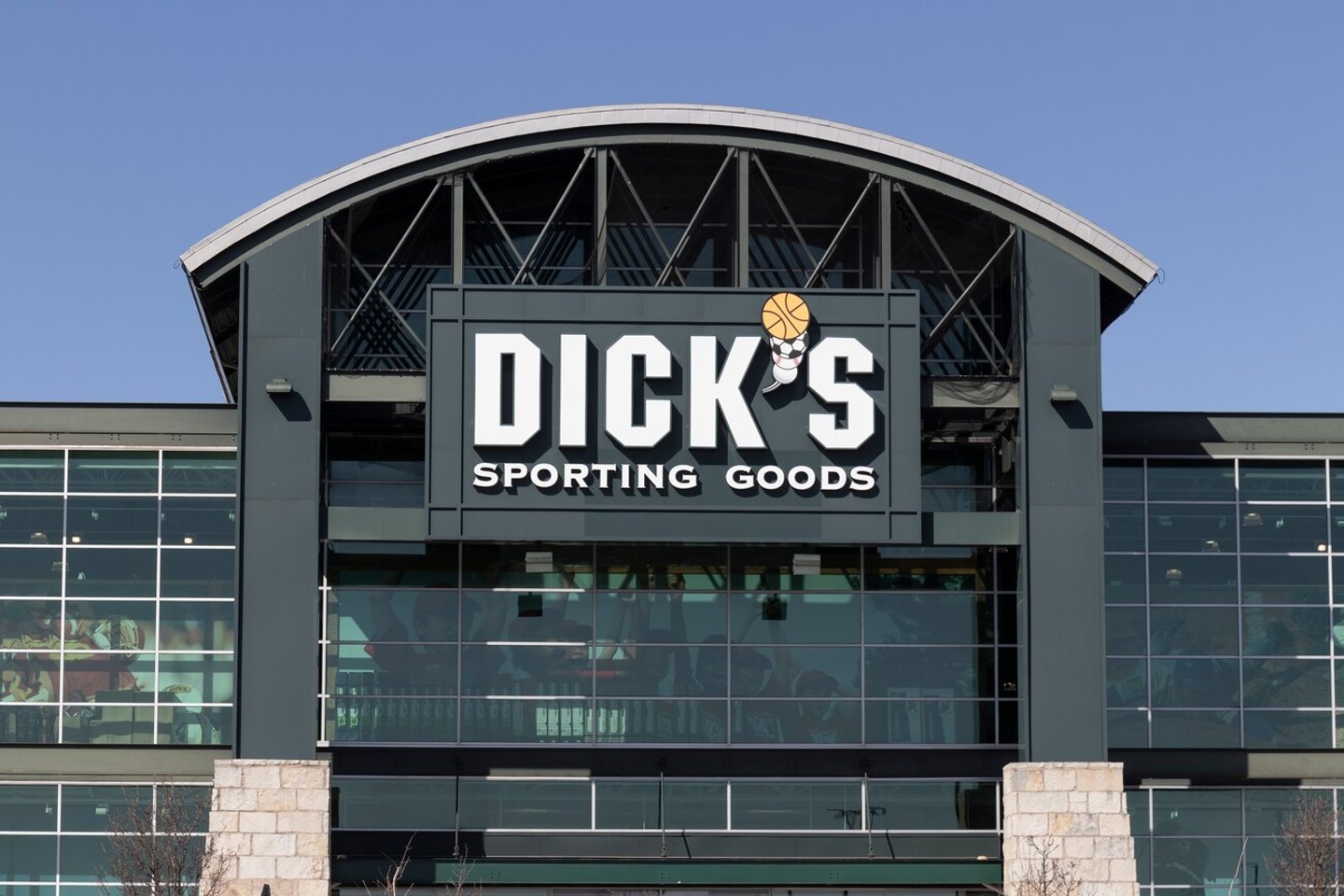
Experiential retailers are among those seeing the most success in the category. Consumer Edge cited the House of Sport concept by Dick's Sporting Goods as the standout performer across all geographic regions. At the concept, guests are able to test new equipment in a variety of environments.
[READ MORE: Dick’s posts record sales; execs detail Foot Locker store pilot initiative]
Looking ahead, Consumer Edge noted that a strong e-commerce presence is key for the sporting goods sector to rebound in the coming year. Consumer Edge data noted that online sales account for 25% of business for Dick's Sporting Goods, 35% for REI and 20% for Scheels.
"We're seeing a shift in sporting goods spending," said Michael Gunther, senior VP of research & market intelligence at Consumer Edge. "While overall category spend has slowed, demand hasn't disappeared – it's consolidating around premium experiences, specialized communities and lifestyle-driven brands. Retailers that rely on broad-based discretionary demand are feeling pressure, particularly from middle-income consumers and tariff exposure. Those investing in experiential retail and strong brand identity are most likely to capture growth."