SPECS 2026: Retailers talk accessible store designs, related initiatives

Despite the passage of the Americans with Disabilities Act (ADA) more than 35 years ago, retailers are working hard to go above and beyond for guests with physical and cognitive disabilities.
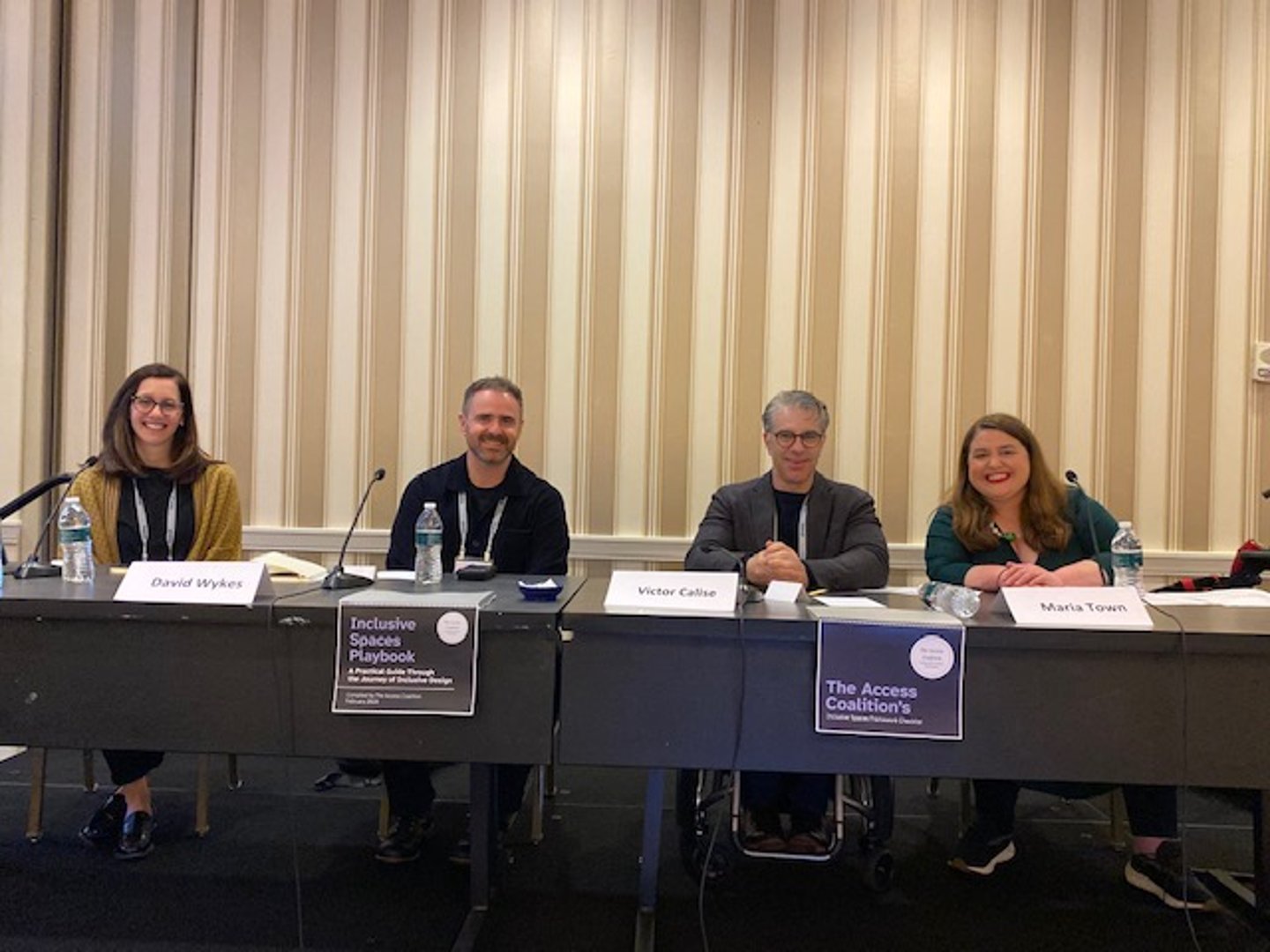
At Chain Store Age’s recent 62nd annual SPECS Show held in National Harbor, Md., retail executives focused on store design discussed new accessibility initiatives during the panel discussion titled “Advancing Accessibility in Retail Through Store Design.”
Maria Town, president and CEO of the American Association of People with Disabilities (AAPD), hosted the panel, which featured leaders from CVS Health, Walmart and Starbucks. AAPD’s Access Coalition is a collection of retailers who are committed to creating more inclusive retail spaces through signage, fixtures, layouts and more.
“The coalition is creating a first-of-its-kind framework to improve physical accessibility and advanced disability inclusion in retail design,” said Town. “Each of the member companies of the coalition has realized that accessibility is about more than meeting the baseline of the ADA. And with one-in-four adults having a disability in the United States, accessibility is far from a niche issue.”
[READ MORE: SPECS 2026: Managing facilities and procuring materials the smart way]
Victor Calise, director of global diversity and the Accessibility Center of Excellence at Walmart, said the retail giant’s approach to making stores more accessible is multi-faceted.
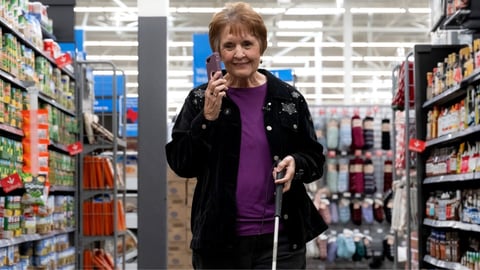
“Our strategy ranges from our sensory-friendly hours that we have at all U.S. Walmart stores, ways that we’re offering wayfinding for people who are blind or have low vision, and our Adaptive at Walmart category for people to buy adaptive equipment,” said Calise. “Our customer is our number one priority. We know we need an open, cross-company coalition to move beyond accessibility one-offs and checklists.”
Starbucks is another retail giant that has launched several sensory- and disability-friendly initiatives in recent years, especially when it comes to store design, making its coffee shops comfortable and accessible for all guests.
“One of the big questions that we constantly ask ourselves is ‘how do we create environments that make people feel welcome?’,” said David Wykes, VP of global coffeehouse concept design at Starbucks. “An accessible space is a welcoming space. We are incorporating softer lighting and acoustics in our stores, and we are looking at expanding the variety of furniture in our coffeehouses so that everyone has a seat for them.”
Elizabeth Fennell, director of architecture and engineering at CVS Health, stressed the benefits of collaboration between retailers in the Access Coalition. She said that one company launching an accessible initiative can prove to be a test case and prove what works or what may need changes.
“This coalition has been a fantastic alignment to our own journey,” Fennell said. “We are partnering with companies that are a little bit further ahead, and it’s pushing us to move that much faster in our efforts. The coalition is a great sounding board, and an opportunity to learn from each other. It’s about supporting everybody at the end of the day.”