
The new playing field for expansion
Over the past five years, the fundamentals of retail real estate have changed dramatically.
Landlords are now operating with far greater cost certainty, and the economics of the deal have moved decisively in our favor. Tenants competing for high-quality spaces today are not only more willing to pay higher rents than they did a few years ago, they are also investing more into their store. The days of landlords funding 100 percent of tenant buildouts is behind us. Today, tenants have more skin in the game, and that is changing economics across the board.
At the same time, retailers are expanding with discipline. Most growing chains have very few underperforming stores, and their appetite for space is broader than it has been in years. The industry has moved beyond trade-area snobbery. Retailers are pursuing strong opportunities wherever the fundamentals support them, including secondary and tertiary markets.
In acquisition mode
The dearth of new retail real estate construction will continue. There is limited land available for new development, and when it does exist, the cost basis is often prohibitive. For most tenants, ground-up new development rent simply does not pencil. If you are a retailer with a 25,000-sq.-ft. requirement, you are not waiting for new construction. You are going to pay $25 to $30 per square foot and open your store to make your money back.
Instead, you are finding space, investing in it, and opening for business, frequently investing side-by-side with landlord partners like DLC to find a win-win medium between rent and cost. We have positioned DLC to take advantage of this environment.
In 2025, we deployed more than $1 billion on acquisitions that will make us one of the largest owners of open-air centers in the United States. We scaled our platform with a focus on high-quality, open-air centers. With our investment partner DRA Advisors, we expanded meaningfully on the West Coast through the acquisition of a 10-property portfolio across California and Washington, including the 514,000-sq.-ft. Clairemont Town Square in San Diego and the 1.5 million-sq.-ft. Alderwood Plaza in Lynnwood, Wash.
This was not a one-off investment. It was a deliberate move to establish a long-term presence in the region. We have since built out a local team and opened a West Coast office to support continued growth across the Pacific and Mountain states. We also continued to target high-performing assets in growth markets, including Towne Center at Cedar Lodge in Baton Rouge, La., a 316,000-sq.-ft. center generating more than 3 million visits annually.
In search of growth markets
We have been equally disciplined on the disposition side, as well. Why are we selling? Because we met our internal investment goals for those assets. This is not a shift in strategy. It is the strategy. We are very good stewards for our investors.
We are constantly evaluating where capital is best deployed. In many cases, that means exiting mature positions and reallocating into markets with stronger long-term growth potential. Our goal has always been to build a national platform, but we were never willing to compromise our investment return criteria just to make that claim.
Scale matters, but only when it is built on the right fundamentals.
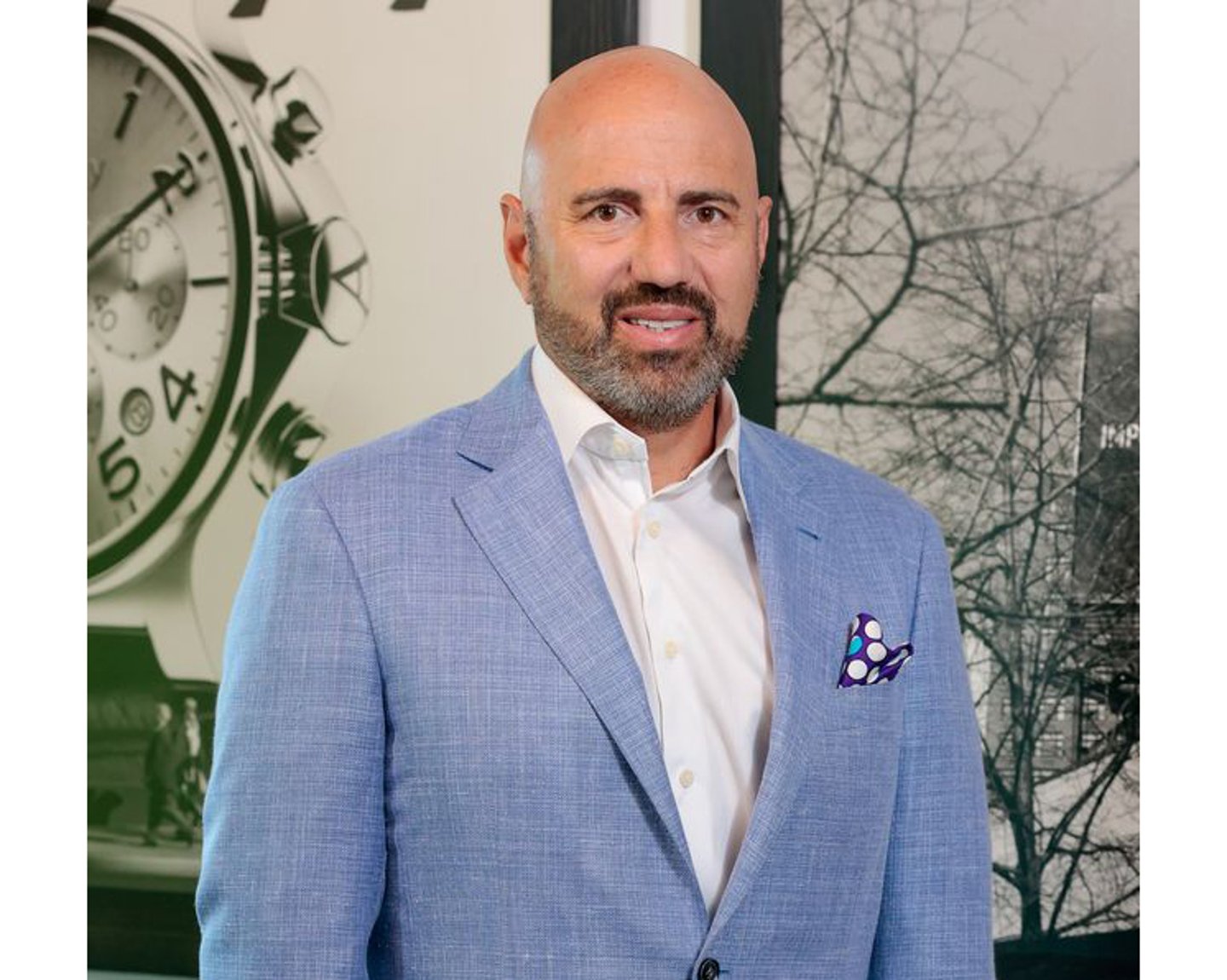
Adam Ifshin is the CEO of Elmsford, N.Y.-based DLC Management Corp.